

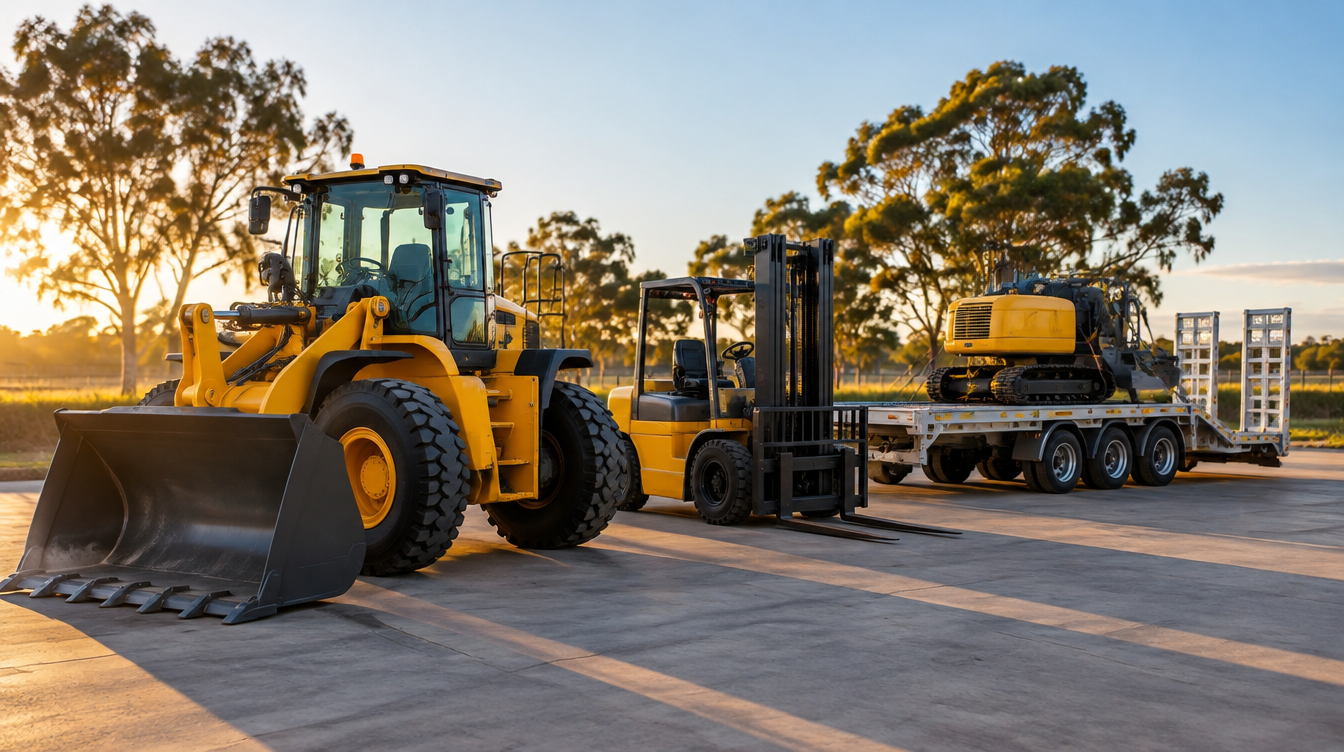
Equipment finance lets your business get the machinery, tools or vehicles it needs now and pay for them over time, while the equipment earns its keep. Instead of tying up working capital you need for wages, fuel and materials, the equipment itself usually secures the loan. Here's how equipment finance works in Australia, the options for different types of businesses, and how to give your application the best shot.
What is equipment finance?
Equipment finance is a loan or lease used by a business to buy an asset it needs to operate. Because the asset secures the finance, pricing is usually sharper than an unsecured business loan, and terms can be matched to the working life of the equipment.
Equipment finance can cover:
- excavators, loaders, skid steers and other yellow goods
- tractors, harvesters and farm machinery
- trailers, forklifts and warehouse equipment
- workshop, manufacturing and medical equipment
- commercial vehicles, utes and trucks
- IT, fit outs and hospitality equipment
- new, used and private sale assets, subject to lender policy.
How does equipment finance work?
- You choose the equipment and get a quote or invoice from the supplier.
- The lender assesses your business and the asset.
- The lender pays the supplier at settlement.
- You repay over a set term, usually at a fixed rate, while the equipment works for you.
Your structure options
Most equipment is financed with a chattel mortgage, a finance lease, commercial hire purchase or a rental. The big differences are who owns the asset and how GST and tax are handled. We compare them in detail in our chattel mortgage vs finance lease guide. Here's the short version:
| Structure | Who owns it | Often suits |
|---|---|---|
| Chattel mortgage | Your business, from day one | Businesses that want to own the asset and claim GST up front |
| Finance lease | The lender, during the lease | Businesses that upgrade regularly |
| Commercial hire purchase | The lender, until the final payment | Businesses that prefer staged ownership |
| Rental | The lender | Equipment that dates quickly, like IT |
Your options, by type of business
The question we hear most isn't "which structure?". It's "will I get approved?". The answer depends on where your business is at.
| Your situation | What lenders usually look for | Your likely path |
|---|---|---|
| Established, financials up to date | Tax returns, financials, clean credit | Full doc finance with the widest choice of lenders |
| Trading well, tax returns behind | BAS, business bank statements or an accountant's letter | Low doc finance, up to $500k subject to lender criteria |
| New ABN | Industry experience, clean credit, a deposit or property, a contract | Specialist lenders that consider newer businesses |
| Buying used or privately | The asset's age, condition and a clear title | Lenders that accept private sales, with PPSR and seller checks |
| Past credit issues | The reason, how long ago and your current position | Fewer lenders and usually higher pricing, so get advice first |
Lenders vary a lot here. One lender's "no" can be another lender's "yes", which is where comparing 70+ lenders makes a real difference.
Protecting your cash flow
The right structure keeps cash in the business. These levers shape your repayments:
- Term. Matching the term to the equipment's working life keeps repayments in line with what it earns.
- Deposit. Not always needed. Many established businesses can borrow with no deposit.
- Balloon. A lump sum at the end lowers regular repayments, but you'll need a plan to pay it. See our balloon payment guide.
- Repayment pattern. Some lenders offer seasonal or structured repayments for businesses with lumpy income.
Equipment finance also keeps your other funding free. Use a line of credit or working capital loan for cash flow, and asset finance for assets.
What does equipment finance cost?
Your rate depends on your business profile, credit, the asset type and age, the term and the lender. Compare the total cost, including fees, not just the headline rate. With the RBA lifting the cash rate to 4.85% on 3 November, a fixed rate locks your repayments in for the term once you settle.
Tax: the quick version
How you structure the finance affects GST credits, depreciation and whether the instant asset write off can apply. Our instant asset write off guide explains the $20,000 rule. How it lands for your business is a question for your accountant.
What to have ready
- your ABN and GST registration details
- your driver's licence
- the supplier's quote or invoice, or the listing for a private sale
- 3 to 6 months of business bank statements
- recent financials, or BAS statements if you're going low doc
- any work contracts that show where the equipment will earn its money.
How Lend It helps
We compare 70+ lenders for equipment finance, from a single trailer to a full fleet of machinery. We'll tell you up front which documents each lender needs, so you only apply once. Approvals can come through in as little as 24 hours.
Getting a quote doesn't affect your credit score. We may run a soft check, and a full credit enquiry only happens when you apply. We're based on the Gold Coast, help businesses Australia wide, have 250+ Google reviews and we're open 7 days, 8:30am to 6pm.
FAQs
What is equipment finance?
A loan or lease that lets a business buy the equipment it needs and repay it over time, usually with the equipment as security.
How does equipment financing work?
The lender pays the supplier, the equipment secures the finance, and your business repays over a fixed term while using it.
How long can you finance equipment for?
Terms commonly run from 1 to 7 years, depending on the lender, the equipment and its age at the end of the term.
Can a new business get equipment finance?
Often, yes. Lenders usually look for industry experience, clean credit, and a deposit, property or a work contract.
Can I finance used equipment?
Yes. Many lenders finance used equipment from dealers and private sellers, with age limits that vary by lender.
Do I need a deposit?
Not always. Established businesses can often borrow with no deposit. Newer businesses and larger deals may need one.
Ready to get the gear?
Tell us what you're buying and how your business is set up, and we'll lay out your options. Get an equipment finance quote or call 1300 082 012.
Researched with AI assistance, written and checked by Dayle Filliponi.
General information only. This article is not financial, tax or legal advice and doesn't take your circumstances into account. Talk to your accountant or a licensed adviser before you make a decision. Information current as at 5 November 2026. Lend It Finance Group is a credit representative (535206) of COG Compliance Services Pty Ltd, Australian Credit Licence 384428.